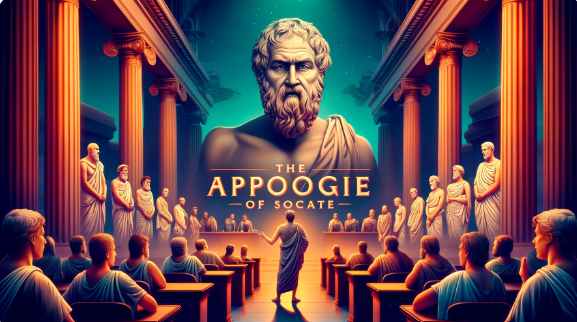
Socrates, one of the most revered philosophers in ancient Greece, left a legacy that continues to inspire and challenge thinkers today. His work, “The Apology,” is a timeless piece that captures the essence of his philosophical journey and his unwavering commitment to the pursuit of truth. In this blog, we will explore the profound wisdom embedded in “The Apology” and why it remains a crucial read for anyone interested in philosophy.
“The Apology” is not an apology in the modern sense but rather a defense. Written by his disciple Plato, it recounts the speech Socrates delivered during his trial in 399 BC. Charged with corrupting the youth and impiety, Socrates stood before the Athenian jury not to beg for mercy but to articulate his principles and defend his way of life. His eloquence and unwavering stance make “The Apology” a masterclass in rhetoric and ethics.
At the heart of Socrates’ defense is the concept of “know thyself.” Socrates famously asserted that true wisdom comes from recognizing one’s own ignorance. This idea, often encapsulated in the phrase “I know that I know nothing,” emphasizes the importance of humility and continuous self-examination. In a world inundated with information and superficial knowledge, Socrates’ message is a poignant reminder of the value of genuine understanding and the dangers of intellectual arrogance.
Socrates’ method of inquiry, known as the Socratic Method, is another cornerstone of his philosophy. This method involves asking a series of probing questions to stimulate critical thinking and illuminate ideas. During his trial, Socrates employed this technique to expose contradictions in the accusations against him and to demonstrate the lack of genuine understanding among his accusers. The Socratic Method remains a powerful tool in education, fostering analytical skills and deeper comprehension.
“The Apology” also highlights Socrates’ courage in the face of adversity. Despite knowing that his stance would likely lead to a death sentence, he refused to renounce his beliefs. Socrates argued that fear of death should not dictate one’s actions, especially when those actions align with a higher moral purpose. His willingness to sacrifice his life for the sake of his principles is a testament to his integrity and the strength of his convictions.
Furthermore, Socrates’ trial and subsequent execution underscore the tension between the individual and the state. His willingness to challenge societal norms and question authority set a precedent for intellectual freedom and ethical inquiry. Socrates’ legacy is a reminder of the importance of standing up for one’s beliefs, even in the face of overwhelming opposition.
In contemporary society, where conformity and passive acceptance are often the norms, Socrates’ life and teachings offer a powerful counter-narrative. “The Apology” encourages us to question the status quo, seek deeper truths, and engage in meaningful dialogue. It invites us to be courageous in our convictions and relentless in our pursuit of knowledge.
For anyone embarking on a philosophical journey, “The Apology” serves as an essential guide. It not only provides insights into Socratic thought but also challenges us to reflect on our own beliefs and the principles we live by. As we navigate the complexities of modern life, the wisdom of Socrates offers timeless guidance and inspiration.
In conclusion, “The Apology” is more than just a historical document; it is a beacon of philosophical inquiry and ethical steadfastness. Socrates’ words and actions continue to resonate, urging us to embrace humility, courage, and the relentless pursuit of truth. Whether you are a seasoned philosopher or a curious beginner, “The Apology” is a profound read that will enrich your understanding of wisdom and the human condition.

コメント